Issue 2

Vocational teacher education and research as a task and challenge for the East- and Southeast Asian region

Editorial Issue 2: Vocational teacher education and research as a task and challenge for the East- and Southeast Asian region

Editorial Issue 2: Vocational teacher education and research as a task and challenge for the East- and Southeast Asian region

Full issue 2
East and Southeast Asia are in the process of experiencing a period of outstanding economic growth and extraordinarily dynamic development and in view of the political regionalisation process achieving a common market by 2015 it should be lent a significant degree of additional momentum. To sustain the rapid development and face the challenges caused by the structural changes of economies, those societies involved will be depending on a highly skilled workforce and thus on functioning TVET-systems to meet both economic and societal demands. TVET-systems are in a process of permanent adaptation to the socioeconomic environment, which leads to an all-round increase and improvement of praxis-orientation in teaching-learning processes. It is evident that the sole employment of the traditional “chalk-and-talk” method in teacher-centred educational settings, does not produce the required workforce.

read more

About TVET@Asia


TVET@Asia is an open content online journal for scientists and practitioners in the field of Technical and Vocational Education and Training (TVET) and Vocational Teacher Education (VTE) in the East and Southeast- Asian region.

Its main purpose is to provide access to peer reviewed papers and thus to enhance the dissemination of relevant content and the initiation of open discussions within the TVET community.

Anticipating ASEAN Economic Community 2015: Regional initiatives on human resources development and recognition of professional qualifications

In anticipation of the ASEAN Integration, especially regarding the ASEAN Economic Community (AEC) 2015 it is clear that many aspects have to be considered and integrated in technical and vocational education and training (TVET). Four major thrusts under AEC include a single market and production base, a highly competitive economic region, a region of equitable economic development, and a region fully integrated into the global economy (ASEAN Secretariat 2010). These thrusts encourage country members to collaborate in several areas. The areas that link closely to TVET, among others, are human resources development and capacity building, recognition of professional qualifications, and the integration of industries across the region to promote regional sourcing. SEAMEO VOCTECH as a regional centre for TVET in Southeast Asia plays an active role in addressing the three mentioned areas.

read more

Developing standards of vocational teacher at bachelor level in Lao PDR

On 11th February 2013 the Ministry of Education and Sports (MoES) declared by decree (cp. MoES 2013) the standards developed by the Faculty of Engineering as binding for the education of vocational teachers at bachelor level in Lao PDR. Which development preceded the enacting of this important decree?

All stakeholders involved in vocational education agree that the quality of vocational training in Lao PDR matches neither the requirements of the Lao labour market, nor the requirements of a future ASEAN market. At the same time, there is agreement about the fact that the quality of the training depends most crucially on the teachers’ competency. As a direct consequence the Ministry of Education and Sports appointed the Faculty of Engineering, more specifically the relevant Vocational Teacher Education Department (VTED), to develop standards for vocational teachers.

read more

An extensive model for implementing APEL and quality assurance in TVET teacher training system for South East Asia

Accreditation of Prior Experiential Learning (APEL) is a relatively new concept in the Malaysian Higher Education system (HEIs) and in South East Asia in general, although widely known and practiced in other countries such as South Africa, Australia and America. Implementing APEL in higher education system could help prepare human capital better particularly for the preparation of teachers in the technical and vocational sector. The paper is based on a study conducted under the auspices of the Regional Cooperation Platform (RCP) aiming to develop an APEL model to steer a systematic adoption of APEL in higher education and increase the number of Technical and Vocational Education Training (TVET)-teachers that have acquired strong practical skills in the world of work.

read more

Occupational competence needs analysis as a basis for TVET curriculum development

Rapid changes occurring in the world of work persistently challenge the actors of technical and vocational education and training (TVET) to update vocational curricula maintaining its relevance to the world of work. TVET teachers are the very actors at the forefront facing the challenge. The ability of teachers to identify the current competences needed by the world of work is of the most important competencies a TVET teacher requires to enable them to make day-to-day improvements of their vocational curricula.

In line with this challenge, the research project entitled “Occupational Competence Need Analysis” attempts to pilot the application of methods to analyse the current situation in the world of work in terms of the core occupational tasks required to perform an occupation. The methods, employed in the research process were (1) occupational sector analysis, (2) expert worker workshop and (3) work process analysis.

read more

Cooperative, regional development and implementation of new Curricula in Vocational Teacher Education – experiences and reflections

As part of the Regional Cooperation Platform for Vocational Teacher Education in Asia (RCP), four vocational teacher training institutions from Vietnam (Namdinh University of Technology Education – NUTE), Laos (Faculty of Engineering/ National University of Laos – FE/ NuoL), Indonesia (Faculty of Technology and Vocational Education/ Indonesia University of Education – FPTK/ UPI) and China (Institute of Vocational Teacher Education – IBB/ Tongji University) have been developing core curricula for Vocational Teacher Education (VTE) in Mechanical Engineering (ME) and Electrical Engineering (EE) at Bachelor Degree.

read more

Vocational educational science

The world-wide socio-economic processes of change such as globalisation, the information age and the changing environmental conditions have a considerable impact on our societies in terms of the design and organisation of the world of work, and also on vocational education. Alternative ways of re-thinking and new structures are imperative for vocational education to prepare the individual for meeting the challenges of changed requirements and for a long professional life with permanent changes (cf. Spöttl 2008; cf. Höpfner & Koch 2003; cf. Songthanapitak & Schröder 2012, cf. OECD 2013).

read more

Approaches towards enhanced praxis-orientation in vocational teacher education (VTE)

When TVET teacher training is the subject of discussions at any conference around the world, not much time elapses before it becomes patently clear, that there are many unresolved issues to do with this sector of the educational system. The self-same impression occurs upon browsing the current literature. One is left pondering just why the list of issues is so extensive compared to teacher training in general education or the same in academic professions such as medicine, law, maths and IT. I am to mention here but one of these problems, related to the curriculum of vocational teacher education (VTE or TVET TT).

read more

Instruments to connect VET systems within the European Union

With the Lisbon (2000) and the Copenhagen Process (2002) the European Union set the goal to become the most competitive and most dynamic knowledge-based economic area of the world (Lisbon), inter alia through enhanced European co-operation in vocational education and training (VET). In the Copenhagen Declaration the following priorities have been set: strengthening of the European dimension in VET; improvement of transparency, information and counselling; recognition of competences and qualifications, including non-formal and informal learning; cooperation in the field of quality assurance. This was the starting point for a number of so called “EU transparency instruments”; today we find them as “mobility and lifelong learning instruments” in official papers.

read more

Regional Cooperation in Vocational Teacher Education – building a platform for common research and development, consultancy and reform in East and Southeast Asia

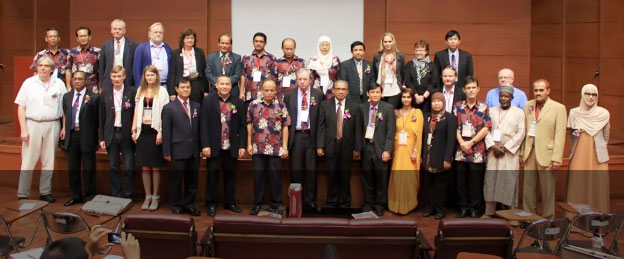
On March 28th 2014, 14 Universities from 9 countries in East and Southeast Asia, that had been actively involved in activities organised by the Regional Cooperation Platform for Vocational Teacher Education in Asia (RCP), founded a self-governed Regional Association for Vocational Teacher Education in East and Southeast Asia (RAVTE) with the support of the Thailand Ministry of Education.

Its organizational predecessor, the Regional Cooperation Platform for Vocational Teacher Education in Asia (RCP), was started as a project funded by the German government, that is to say the Federal Ministry for Economic Cooperation and Development and has been operated since 2009 by the Deutsche Gesellschaft für Internationale Zusammenarbeit (GIZ).

read more

No Results Found

The page you requested could not be found. Try refining your search, or use the navigation above to locate the post.

No Results Found

The page you requested could not be found. Try refining your search, or use the navigation above to locate the post.

No Results Found

The page you requested could not be found. Try refining your search, or use the navigation above to locate the post.

No Results Found

The page you requested could not be found. Try refining your search, or use the navigation above to locate the post.

No Results Found

The page you requested could not be found. Try refining your search, or use the navigation above to locate the post.

No Results Found

The page you requested could not be found. Try refining your search, or use the navigation above to locate the post.

Call for Papers:

Issue 28: Bridging the Skills Gap: Industry–TVET Partnerships for Workforce Readiness

TVET@Asia invites researchers, scholars, practitioners, and policymakers to contribute to a special issue focused on the theme of Bridging the Skills Gap: Industry–TVET Partnerships for Workforce Readiness.

Scope and Objective:

The rapid acceleration of digitalization, the transformative influence of artificial intelligence (AI) and robotics, the transition toward a green economy, and the volatility of global markets have created an urgent need for a workforce capable of adapting through continuous skill expansion and professional development. As industry requirements evolve more rapidly than traditional curricula, the synergy between Technical and Vocational Education and Training (TVET) and the industrial sector has become a strategic imperative. To ensure genuine workforce readiness, we must move beyond superficial cooperation toward deep, systemic partnerships.

Sustainable industry-TVET partnerships require alignment across multiple dimensions. At the institutional and legal level, public-private partnerships must be grounded in clear obligations and mutual requirements. Curricula must integrate the evolving competences demanded by industry, while teaching and learning methodologies should mirror actual workplace conditions. Furthermore, TVET institutions require the necessary infrastructure to support high-quality work-based learning, and educators must maintain an up-to-date understanding of industrial production processes to deliver industry-driven skills. Achieving these goals requires structured communication frameworks to facilitate continuous exchange between all stakeholders.

This issue aims to examine the various dimensions of industry-TVET partnerships in promoting workforce readiness. We invite original research papers, conceptual and theoretical works, policy-focused studies, and practical case analyses that investigate how established private-public partnerships can close the skills gap and enhance employability. Contributions may also provide critical reflections on policies, models, innovations, and the broader impact of these partnerships on learners, industries, and communities.

Potential areas of interest include, but are not limited to:

  • Co-Curriculum Development: Strategies for agile curriculum design involving industry stakeholders to ensure alignment with real-world labor market needs.
  • Work-Integrated Learning: Evaluation of dual-education systems, apprenticeships, and internship models that effectively transition students from classroom to workplace.
  • Teacher & Trainer Professionalization: Models for "industry-to-classroom" knowledge transfer and the continuous upskilling of TVET instructors.
  • Policy & Governance: Analysis of public-private partnership frameworks that incentivize industry investment in vocational education.
  • Inclusive Readiness: Ensuring that TVET partnerships address equity, diversity, and the inclusion of marginalized groups in the modern workforce.

This issue is intended to serve as an important reference and knowledge platform for educators, industry stakeholders, researchers, and policymakers who are dedicated to strengthening TVET’s role in bridging skills gap and promoting work readiness.

Submission Guidelines:

Authors are invited to submit their original manuscripts following the guidelines provided by TVET@Asia Online Journal. All submissions will undergo a rigorous peer-review process to ensure the quality, relevance, and originality of the research. Manuscripts should be written in English and adhere to the journal's formatting and citation style.

Please note that the journal does not provide language editing or copyediting services. Authors are therefore responsible for ensuring that their manuscripts are written in clear and correct English prior to submission. Authors are encouraged to carefully check grammar, spelling, and language quality before submission and may consider using professional language editing services or AI-supported writing tools where appropriate.

We welcome submissions from any interested authors!

We look forward to receiving your contributions!

Please find below:

    Editors of Issue 28

    These are the editors of our upcoming TVET@Asia issue:

    Adeline Goh Yuen Sze (University of Brunei Darussalam)

    Philipp Grollmann (TU Dortmund University)

    Siriphorn Schlattmann (Rajamangala University of Technology Lanna)

    Lee Ming Foong (Tun Hussein Onn University of Malaysia)

    Become an Author

    This Call for Papers is open to any interested author.

    We invite scholars, scientists, curriculum developers, practitioners and teachers from the TVET community to contribute to the upcoming Issue 28 of TVET@Asia. 

    We look forward to receiving your contributions!

    TIMELINE

    "

    Submit Your Abstract

    by August 30th, 2026

    To participate we ask you to send us the following documents:

    1. an abstract of no more than one page (please download this form),
    2. a short CV/profile (half page),
    3. a photograph of yourself, and
    4. a list of publications

    Please submit your work via E-Mail:

    "

      Abstract Notification

    by September 11th, 2026 you will be informed whether your abstract has been accepted.

    "

    Paper Submission

    Please use this article template to submit your paper.

    The full draft paper should be submitted until: October 20th, 2026.

    "

    Peer Review

    Notification of acceptance and peer review feedback by November 27th, 2026.

    "

    Final Submission

    Submission of the final, correctly-formatted paper by January 8th, 2027.

    "

    Publication

    Tentative publication date: February 12th, 2027.

    Sign up for our Newsletter

    Here you can subscribe to our newsletter! Through the newsletter we will inform you about new Calls for Papers, the publication of new issues of TVET@Asia as well as the latest publications and events in the field of Technical and Vocational Education and Training.

    Here you can subscribe to our newsletter! Through the newsletter we will inform you about new Calls for Papers, the publication of new issues of TVET@Asia as well as the latest publications and events in the field of Technical and Vocational Education and Training.

    Subscribe To Our Newsletter

    Subscribe To Our Newsletter

    Join our mailing list to receive the latest news and updates from our team.

    You have Successfully Subscribed!